Assalamualaikum to all reader of my blog.My name is Muhammad Nazri Shahruddin bin Ramle.I`m 18 years old.I`m lives at Kampung Sungai Sembilang,Kota Tinggi,Johor and i studied at SMK Tun Habab.I can`t speak fluent english but i try my best.I try to explain for you guys about communication technology in my blog.I hope you all enjoy to read my blog.
COMPUTER NETWORK

TYPE OF NETWORK
LAN
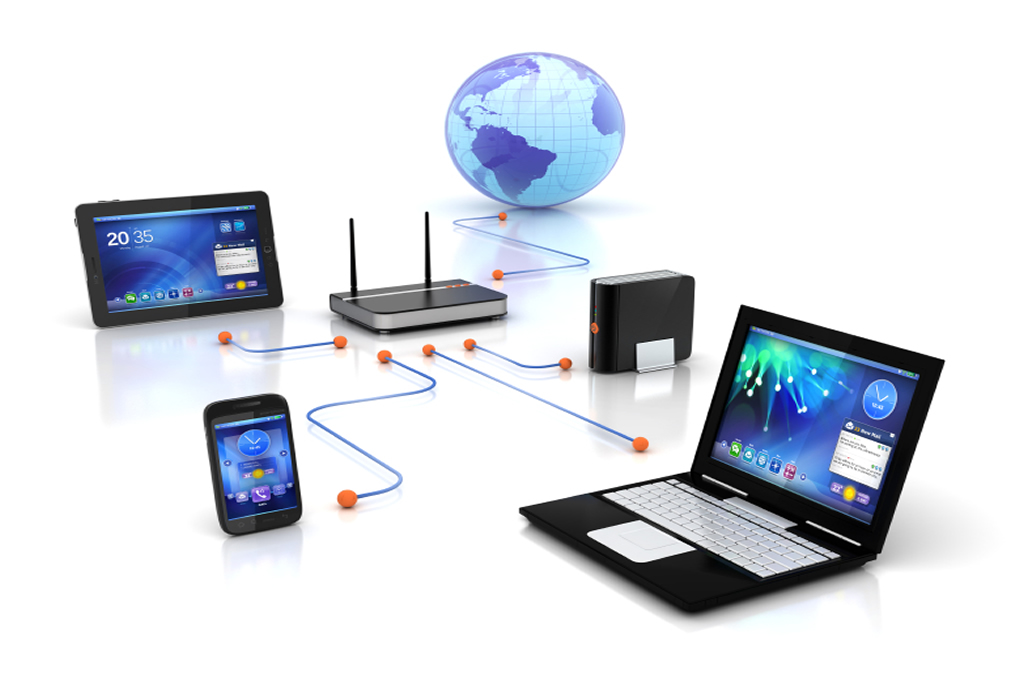
It's a group of computers which all belong to the same organization, and which are linked within a small geographic area using a network, and often the same technology (the most widespread being Ethernet).


NETWORK ARCHITECTURE
NETWORK TOPOLOGY
Network topology is the arrangement of the various elements (links, nodes, etc.) of a computer network. Essentially, it is thetopological structure of a network and may be depicted physically or logically. Physical topology is the placement of the various components of a network, including device location and cable installation, while logical topology illustrates how data flows within a network, regardless of its physical design. Distances between nodes, physical interconnections, transmission rates, or signal types may differ between two networks, yet their topologies may be identical.
TYPES OF NETWORK TOPOLOGY
BUS
TYPES OF COMMUNICATION TECHNOLOGY
Telephone
 Radio
Radio

Television

WIRED
In computing terminology, the term "wired" is used to differentiate between wireless connections and those that involve cables. While wireless devices communicate over the air, a wired setup uses physical cables to transfer data between different devices and computer systems.
TWISTED PAIR

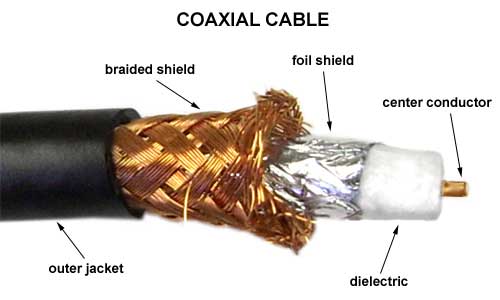
Coaxial cable, or coax (pronounced /ˈkoʊ.æks/), is a type of cable that has an inner conductor surrounded by a tubular insulating layer, surrounded by a tubular conducting shield. Many coaxial cables also have an insulating outer sheath or jacket. The term coaxial comes from the inner conductor and the outer shield sharing a geometric axis. Coaxial cable was invented by English engineer and mathematician Oliver Heaviside, who patented the design in 1880.[1] Coaxial cable differs from other shielded cable used for carrying lower-frequency signals, such as audio signals, in that the dimensions of the cable are controlled to give a precise, constant conductor spacing, which is needed for it to function efficiently as a transmission line.


COMPUTER NETWORK
A computer network or data network is a telecommunications network that allows computers to exchange data. In computer networks, networked computing devices pass data to each other along data connections. The connections (network links) between nodes are established using either cable media or wireless media. The best-known computer network is the Internet.Network computer devices that originate, route and terminate the data are called network nodes. Nodes can include hosts such as personal computers, phones,servers as well as networking hardware. Two such devices are said to be networked together when one device is able to exchange information with the other device, whether or not they have a direct connection to each other.Computer networks support applications such as access to the World Wide Web, shared use of application and storage servers, printers, and fax machines, and use of email and instant messaging applications. Computer networks differ in the physical media used to transmit their signals, the communications protocols to organize network traffic, the network's size, topology and organizational intent.
TYPE OF NETWORK
LAN
It's a group of computers which all belong to the same organization, and which are linked within a small geographic area using a network, and often the same technology (the most widespread being Ethernet).
MANs
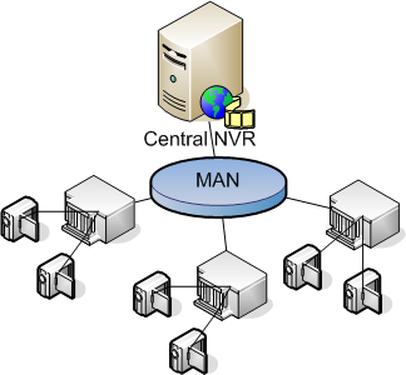
MANs (Metropolitan Area Networks) connect multiple geographically nearby LANs to one another (over an area of up to a few dozen kilometres) at high speeds. Thus, a MAN lets two remote nodes communicate as if they were part of the same local area network.
A MAN is made from switches or routers connected to one another with high-speed links (usually fibre optic cables).
WANs
A WAN (Wide Area Network or extended network) connects multiple LANs to one another over great geographic distances.
The speed available on a WAN varies depending on the cost of the connections (which increases with distance) and may be low.
WANs operate using routers, which can "choose" the most appropriate path for data to take to reach a network node.
NETWORK ARCHITECTURE
NETWORK TOPOLOGY
Network topology is the arrangement of the various elements (links, nodes, etc.) of a computer network. Essentially, it is thetopological structure of a network and may be depicted physically or logically. Physical topology is the placement of the various components of a network, including device location and cable installation, while logical topology illustrates how data flows within a network, regardless of its physical design. Distances between nodes, physical interconnections, transmission rates, or signal types may differ between two networks, yet their topologies may be identical.
TYPES OF NETWORK TOPOLOGY
BUS
Main article: Bus network
- In local area networks where bus topology is used, each node is connected to a single cable. Each computer or server is connected to the single bus cable. A signal from the source travels in both directions to all machines connected on the bus cable until it finds the intended recipient. If the machine address does not match the intended address for the data, the machine ignores the data. Alternatively, if the data matches the machine address, the data is accepted. Because the bus topology consists of only one wire, it is rather inexpensive to implement when compared to other topologies. However, the low cost of implementing the technology is offset by the high cost of managing the network. Additionally, because only one cable is utilized, it can be the single point of failure.

- STAR
- Main article: Star network
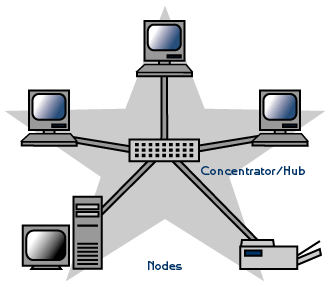
- In local area networks with a star topology, each network host is connected to a central hub with a point-to-point connection. In Star topology every node (computer workstation or any other peripheral) is connected to a central node called hub or switch. The switch is the server and the peripherals are the clients. The network does not necessarily have to resemble a star to be classified as a star network, but all of the nodes on the network must be connected to one central device. All traffic that traverses the network passes through the central hub. The hub acts as a signal repeater. The star topology is considered the easiest topology to design and implement. An advantage of the star topology is the simplicity of adding additional nodes. The primary disadvantage of the star topology is that the hub represents a single point of failure.
- RING
- Main article: Ring network
- A network topology that is set up in a circular fashion in which data travels around the ring in one direction and each device on the ring acts as a repeater to keep the signal strong as it travels. Each device incorporates a receiver for the incoming signal and a transmitter to send the data on to the next device in the ring. The network is dependent on the ability of the signal to travel around the ring. When a device sends data, it must travel through each device on the ring until it reaches its destination. Every node is a critical link.[4] In a ring topology, there is no server computer present; all nodes work as a server and repeat the signal. The disadvantage of this topology is that if one node stops working, the entire network is affected or stops working.

TYPES OF COMMUNICATION TECHNOLOGY
Telephone
Alexander Graham Bell revolutionized the way people communicate with his patent on the telephone in 1876. Over the past century, advances in technology have replaced the heavy hardware and metal wiring of the original design with lightweight microcircuitry. These advancements have also allowed for the transition from landlines to wireless, freeing people to communicate from remote locations. All over the world, millions of people can talk to each other, expanding businesses and improving relationships that might not otherwise have survived across long distances. Telephones also allow for instant communication, and new technology integrates video and Internet.
In 1906, Reginald Fessenden, creator of the first sophisticated radio transmitter, expanding on the ideas of Guglielmo Marconi, sent music and speech across the airwaves. This invention of the radio allowed sound and information to be broadcast to an extremely wide audience. Radio reached its golden age during the 1920s, and companies advertised their products to consumers around the world. During the 1930s radio expanded further into news, politics, vaudeville routines and sporting events, broadcasting into millions of homes every day.
Television
Television was introduced to the public in 1946, even though it had been experimented with since the late 1920s. Television exploded in homes around the world, going from 940,000 households in the beginning to 20 million by 1953. Corporations suddenly had the opportunity to show their products, not just describe them. Over the following decades, television became the predominant source of communication to a wide audience, and it changed the political and cultural landscape forever. People were suddenly able to witness iconic events, such as the first moon landing and the progression of the civil rights movement.
In computing terminology, the term "wired" is used to differentiate between wireless connections and those that involve cables. While wireless devices communicate over the air, a wired setup uses physical cables to transfer data between different devices and computer systems.
TWISTED PAIR
Twisted pair is the ordinary copper wire that connects home and many business computers to the telephone company. To reduce crosstalk or electromagnetic induction between pairs of wires, two insulated copper wires are twisted around each other.
COAXIAL CABLE
FIBER OPTIC
Fiber-optic communication is a method of transmitting information from one place to another by sending pulses of light through anoptical fiber. The light forms an electromagnetic carrier wave that is modulated to carry information.
WIRELESS
A wireless network is any type of computer network that uses wireless data connections for connecting network nodes.Wireless networking is a method by which homes, telecommunications networks and enterprise (business) installations avoid the costly process of introducing cables into a building, or as a connection between various equipment locations.[1] Wireless telecommunications networks are generally implemented and administered using radio communication. This implementation takes place at the physical level (layer) of the OSI model network structure.[2]
SATELLITE
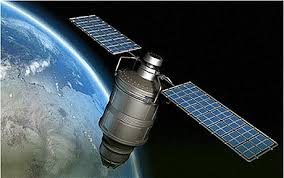
In the context of spaceflight, a satellite is an artificial object which has been intentionally placed into orbit. Such objects are sometimes called artificial satellites to distinguish them from natural satellites such as the Moon.
The world's first artificial satellite, the Sputnik 1, was launched by the Soviet Union in 1957. Since then, thousands of satellites have been launched into orbit around the Earth. Some satellites, notably space stations, have been launched in parts and assembled in orbit. Artificial satellites originate from more than 40 countries and have used the satellite launching capabilities of ten nations. A few hundred satellites are currently operational, whereas thousands of unused satellites and satellite fragments orbit the Earth as space debris.
MICROWAVE
Microwaves are a form of electromagnetic radiation with wavelengths ranging from as long as one meter to as short as one millimeter; withfrequencies between 300 MHz (100 cm) and 300 GHz (0.1 cm).[1][2] This broad definition includes both UHF and EHF (millimeter waves), and various sources use different boundaries. In all cases, microwave includes the entire SHF band (3 to 30 GHz, or 10 to 1 cm) at minimum, withRF engineering often restricting the range between 1 and 100 GHz (300 and 3 mm).
The prefix micro- in microwave is not meant to suggest a wavelength in the micrometer range. It indicates that microwaves are "small", compared to waves used in typical radio broadcasting, in that they have shorter wavelengths. The boundaries between far infrared, terahertz radiation, microwaves, and ultra-high-frequency radio waves are fairly arbitrary and are used variously between different fields of study.
BLUETOOTH
Bluetooth is a wireless technology standard for exchanging data over short distances (using short-wavelength UHF radio waves in the ISM band from 2.4 to 2.485 GHz[4]) from fixed and mobile devices, and building personal area networks (PANs). Invented by telecom vendor Ericsson in 1994,[5] it was originally conceived as a wireless alternative to RS-232 data cables. It can connect several devices, overcoming problems of synchronization.
COMMUNICATION PROTOCOL
TCP/IP
TCP/IP is two separate protocols, TCP and IP, that are used together. The Internet Protocol standard dictates how packets of information are sent out over networks. IP has a packet-addressing method that lets any computer on the Internet forward a packet to another computer that is a step (or more) closer to the packet's recipient. The Transmission Control Protocol ensures the reliability of data transmission across Internet connected networks. TCP checks packets for errors and submits requests for re-transmissions if errors are found.
SMTP
SMTP stands for Simple Mail Transfer Protocol. It's a set of communication guidelines that allow software to transmit email over the Internet. Most email software is designed to use SMTP for communication purposes when sending email, and It only works for outgoing messages. When people set up their email programs, they will typically have to give the address of their Internet service provider's SMTP server for outgoing mail. There are two other protocols - POP3 and IMAP - that are used for retrieving and storing email.
Apple Talk
AppleTalk is a set of local area network communication protocols originally created for Apple computers. An AppleTalk network can support up to 32 devices and data can be exchanged at a speed of 230.4 kilobits per second (Kbps). Devices can be as much as 1,000 feet apart. AppleTalk's Datagram Delivery Protocol corresponds closely to the Network layer of the Open Systems Interconnection (OSI) communication model.
Netbeui
NetBEUI (NetBIOS Extended User Interface) is a new, extended version of NetBIOS, the program that lets computers communicate within a local area network. NetBEUI (pronounced net-BOO-ee) formalizes the frame format (or arrangement of information in a data transmission) that was not specified as part of NetBIOS. NetBEUI was developed by IBM for its LAN Manager product and has been adopted by Microsoft for its Windows NT, LAN Manager, and Windows for Workgroups products. Hewlett-Packard and DEC use it in comparable products.
NetBEUI is the best performance choice for communication within a single LAN. Because, like NetBIOS, it does not support the routing of messages to other networks, its interface must be adapted to other protocols such asInternetwork Packet Exchange or TCP/IP. A recommended method is to install both NetBEUI and TCP/IP in each computer and set the server up to use NetBEUI for communication within the LAN and TCP/IP for communication beyond the LAN.
REFERENCE
http://en.wikipedia.org/wiki/Computer_network
http://en.wikipedia.org/wiki/Network_architecture
http://en.wikipedia.org/wiki/Network_topology
http://en.wikipedia.org/wiki/Network_architecture
http://en.wikipedia.org/wiki/Topology
http://compnetworking.about.com/od/networkdesign/a/topologies.htm
http://en.wikipedia.org/wiki/Wired_%28magazine%29
http://searchdatacenter.techtarget.com/definition/twisted-pair
http://en.wikipedia.org/wiki/Wireless_network
http://searchnetworking.techtarget.com/definition/TCP-IP
http://en.wikipedia.org/wiki/Simple_Mail_Transfer_Protocol
http://en.wikipedia.org/wiki/AppleTalk
